54Chapters of
The Tale of Genji

It is written by Murasaki Shikibu(Lady Murasaki) in the 11th century.I will introduce 54Chapters and Related Arts and Crafts.

Continue reading...

53. Writing-Practice / At Writing Practice(手習)
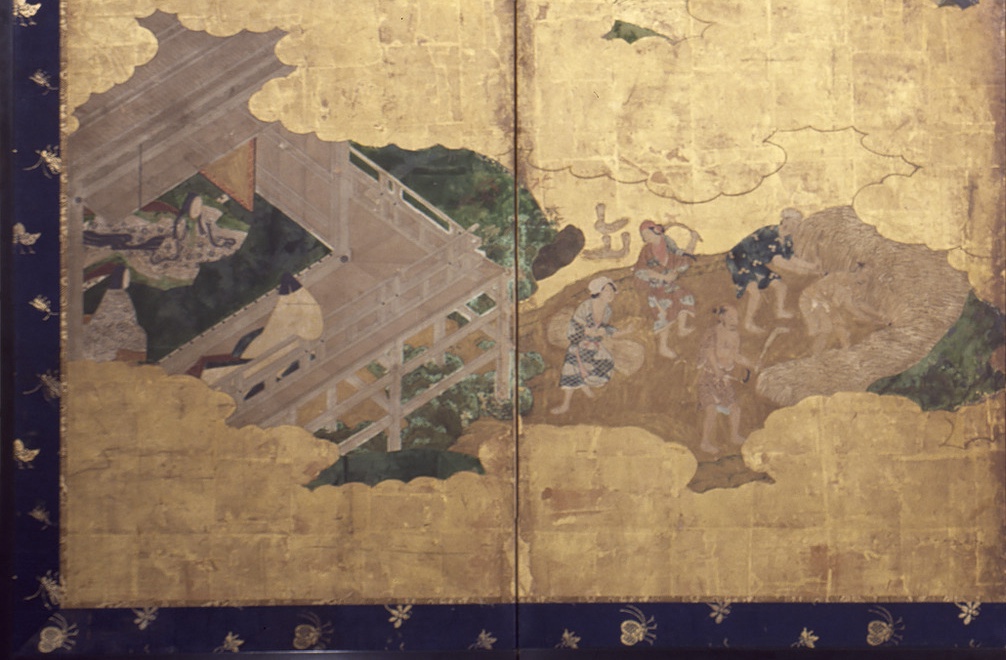
writing
土佐光吉,Tosa Mitsuyoshi,京都国立博物館 Kyoto National Museum,Kyoto National Museum『源氏物語図』(京都国立博物館 Kyoto National Museum所蔵) 「ColBase」収録(https://jpsearch.go.jp/item/cobas-5502)

Passage

Lying awake all night she could not prevent her thoughts from retracing the whole history of her unhappy past. The father whom she had never known, the long years wasted in repeated† exile, her pleasure at the reunion with her sister suddenly dashed to the ground. Then had come a time when things seemed to be going better. Kaoru’s solid affection had at last set her on firmer ground. But at the critical moment she had thrown her one chance of happiness away, and when she looked back now on all that had happened she could not understand how she had ever come to forgive Niou for the cruel injury that he had inflicted upon her. Everything down to this night of sordid terror was his doing, and his alone. The memory of his swift wooing— the little boat, the island, every detail of the whole adventure—filled her now with nothing but distaste and remorse; whereas the thought of Kaoru’s calm, steady affection—the innumerable acts of kindness that she found herself recollecting at every turn—still made him infinitely dear. It mattered in reality very little whether other people knew or did not know of the depths to which she had fallen; he at any rate must never know. He must always think of her as dead; and yet before she died, just once, if only from afar—but she knew that it could never be. What use was it to go over all this again, when she had done so to no purpose a thousand times before? At last the cock crowed.

Ukifune reflects on her own life. And she decides to become a nun. This introspection is like Virginia Woolf.
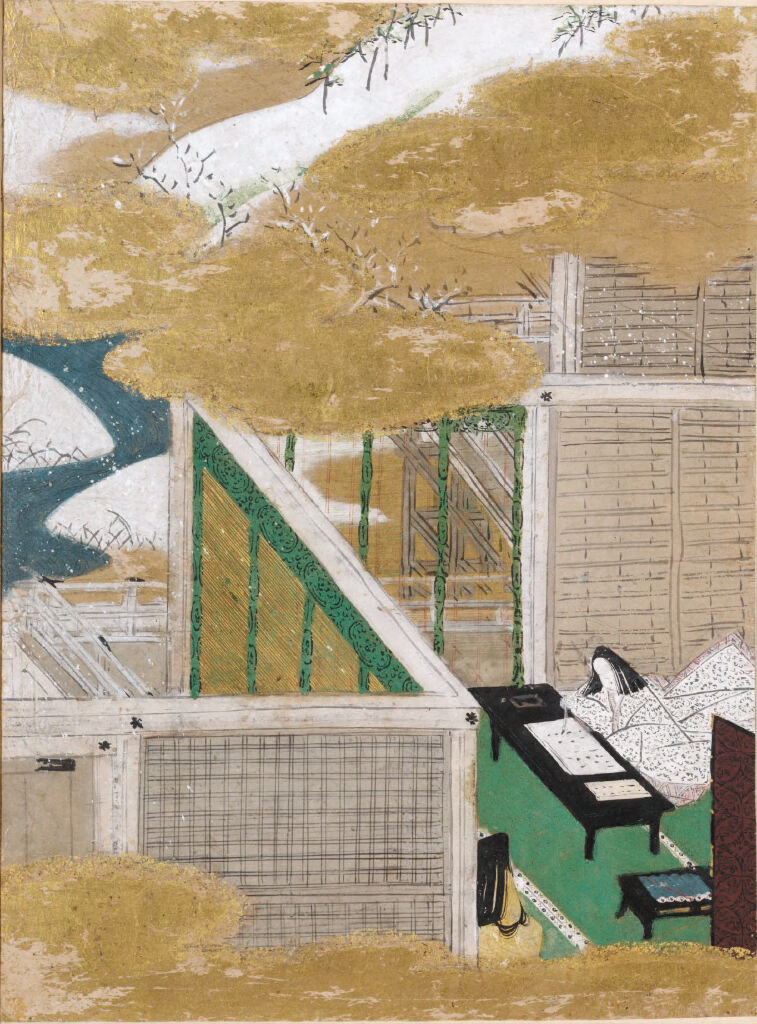
writing
Harvard Art Museums,Writing Practice (Tenarai), Illustration to Chapter 53 of the Tale of Genji (Genji monogatari),Tosa Mitsunobu,Muromachi period

Summary

Ukifune failed in her suicide and was lying along the Uji River. Yogawa no Sozu found her and rescued her, then carried her to Ono's hermitage. Through Sozu's prayers and the care of Sozu's family, Ukifune awakened from her coma. She learned that she had failed in her suicide attempt and wished to become a nun.

Sozu's younger sister doted on Ukifune. Sozu's sister had once lost her own daughter. Ukifune resembled her daughter closely. A nobleman who had been the deceased daughter's husband came to visit the hermitage. The nobleman made advances toward Ukifune, but she refused. Ukifune pleaded with Sozu and, after holding the tonsure ceremony, became a nun.

The following spring, Kaoru hears rumors that Ukifune is still alive. To confirm the truth, Kaoru goes to meet Sozu.

Comment

Ukifune regained her life, but the same thing happens in this chapter. The variation in 'The Tale of Genji' of 'being courted by men because she resembles a deceased woman.' To escape from this cycle, Ukifune chooses to become a nun.

About

I live in Kyoto.Introduce Japanese literature with the help of Google Translate.please excuse my english.

54Chapters

  1. 1. Kiritsubo / The Paulownia Court(桐壺)
  2. 2. The Broom-Tree / The Broom Tree(帚木)
  3. 3. Utsusemi / The Shell of the Locust(空蝉)
  4. 4. Yugao / Evening Faces(夕顔)
  5. 5. Murasaki / Lavender(若紫)
  6. 6. The Saffron-Flower / The Safflower(末摘花)
  7. 7. The Festival of Red Leaves / An Autumn Excursion(紅葉賀)
  8. 8. The Flower Feast / The Festival of the Cherry Blossoms(花宴)
  9. 9. Aoi / Heartvine(葵)
  10. 10. The Sacred Tree / The Sacred Tree(賢木)
  11. 11. The Village of Falling Flowers / The Orange Blossoms(花散里)
  12. 12. Exile at Suma / Suma(須磨)
  13. 13. Akashi / Akashi(明石)
  14. 14. The Flood Gauge / Channel Buoys(澪標)
  15. 15. The Palace in the Tangled Woods / The Wormwood Patch(蓬生)
  16. 16. A Meeting at the Frontier / The Gatehouse(関屋)
  17. 17. The Picture Competition / A Picture Contest(絵合)
  18. 18. The Wind in the Pine-Trees / The Wind in the Pines(松風)
  19. 19. A Wreath of Cloud / A Rack of Cloud(薄雲)
  20. 20. Asagao / The Morning Glory(朝顔)
  21. 21. The Maiden / The Maiden(少女)
  22. 22. Tamakatsura / The Jeweled Chaplet(玉鬘)
  23. 23. The First Song of the Year / The First Warbler(初音)
  24. 24. The Butterflies / Butterflies(胡蝶)
  25. 25. The Glow-Worm / Fireflies(蛍)
  26. 26. A Bed of Carnations / Wild Carnations(常夏)
  27. 27. The Flares / Flares(篝火)
  28. 28. The Typhoon / The Typhoon(野分)
  29. 29. The Royal Visit / The Royal Outing(行幸)
  30. 30. Blue Trousers / Purple Trousers(藤袴)
  31. 31. Makibashira / The Cypress Pillar(真木柱)
  32. 32. The Spray of Plum-Blossoms / A Branch of Plum(梅枝)
  33. 33. Fuji No Uraba / Wisteria Leaves(藤裏葉)
  34. 34. Wakana, Part I / New Herbs: Part One(若菜上)
  35. 35. Wakana, Part II / New Herbs: Part Two(若菜下)
  36. 36. Kashiwagi / The Oak Tree(柏木)
  37. 37. The Flute / The Flute(横笛)
  38. 38. (no title)/ The Bell Cricket(鈴虫)
  39. 39. Yugiri / Evening Mist(夕霧)
  40. 40. The Law / The Rites(御法)
  41. 41. Mirage / The Wizard(幻)
  42. Kumogakure / Vanished into the Clouds(雲隠)
  43. 42. Niou / His Perfumed Highness(匂宮)
  44. 43. Kobai / The Rose Plum(紅梅)
  45. 44. Bamboo River / Bamboo River(竹河)
  46. 45. The Bridge Maiden / The Lady at the Bridge(橋姫)
  47. 46. At the foot of the Oak-Tree / Beneath the Oak(椎本)
  48. 47. Agemaki / Trefoil Knots(総角)
  49. 48. Fern-Shoots / Early Ferns(早蕨)
  50. 49. The Mistletoe / The Ivy(宿木)
  51. 50. The Eastern House / The Eastern Cottage(東屋)
  52. 51. Ukifune / A Boat upon the Waters(浮舟)
  53. 52. The Gossamer-Fly / The Drake Fly(蜻蛉)
  54. 53. Writing-Practice / At Writing Practice(手習)
  55. 54. The Bridge of Dreams / The Floating Bridge of Dreams(夢浮橋)