54Chapters of
The Tale of Genji

It is written by Murasaki Shikibu(Lady Murasaki) in the 11th century.I will introduce 54Chapters and Related Arts and Crafts.

Continue reading...

The tombstone of Yūgao -- The Tale of Genji: Famous Places and Historic Sites in Kyoto
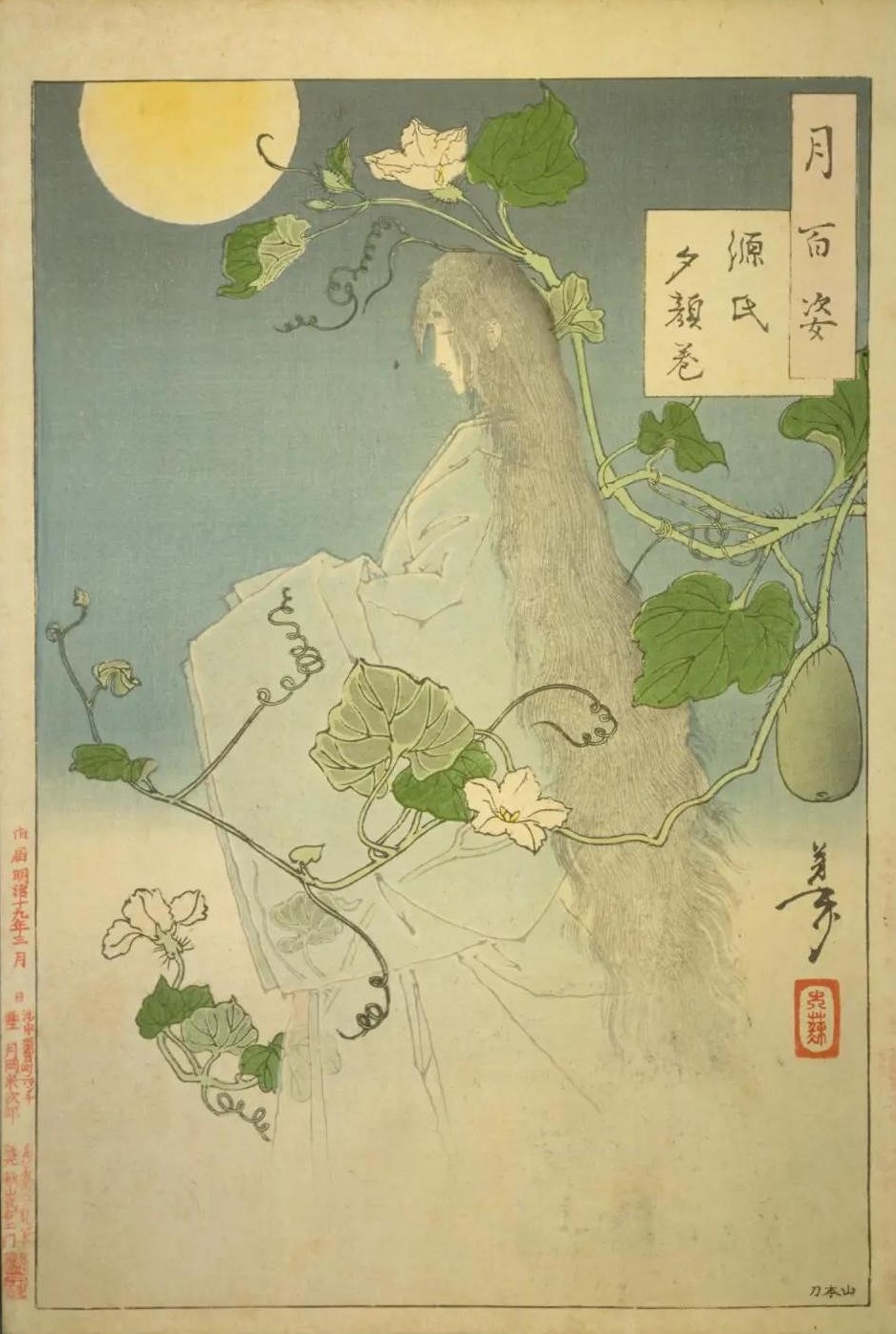
yugao
芳年,秋山武右エ門『月百姿 源氏夕顔巻』(国立国会図書館所蔵) 「国立国会図書館デジタルコレクション」収録(https://jpsearch.go.jp/item/dignl-1306386)

Yūgao is a popular heroine in "The Tale of Genji". Possessing an aura of beauty, gentleness, and fragility, she embodies a type that holds a special appeal for the Japanese people. She helps shape the "Genji universe" alongside other key figures—such as the primary heroine Murasaki, the passionate Oborozukiyo, the humble Akashi, and the domestic Hanachirusato.

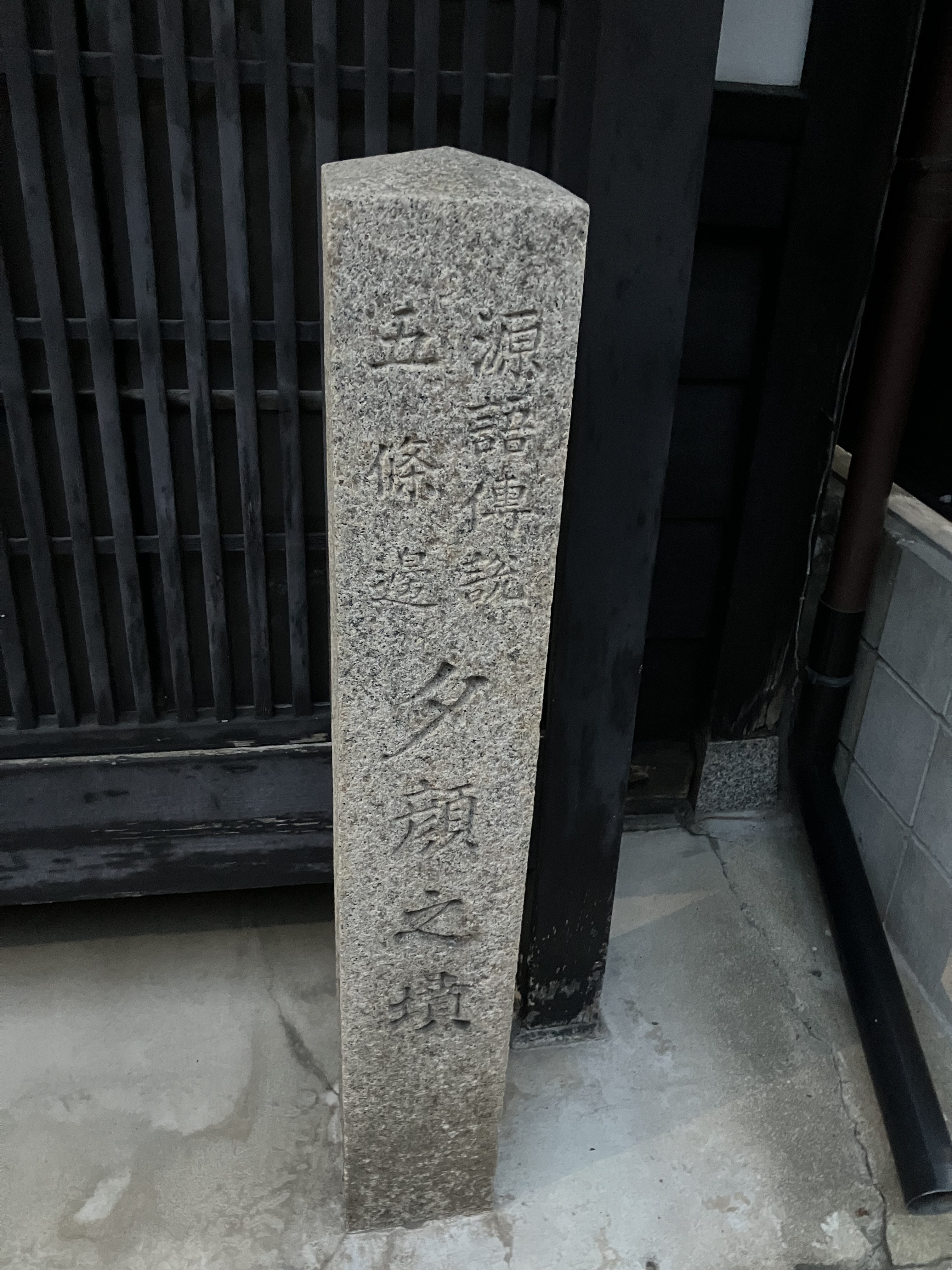
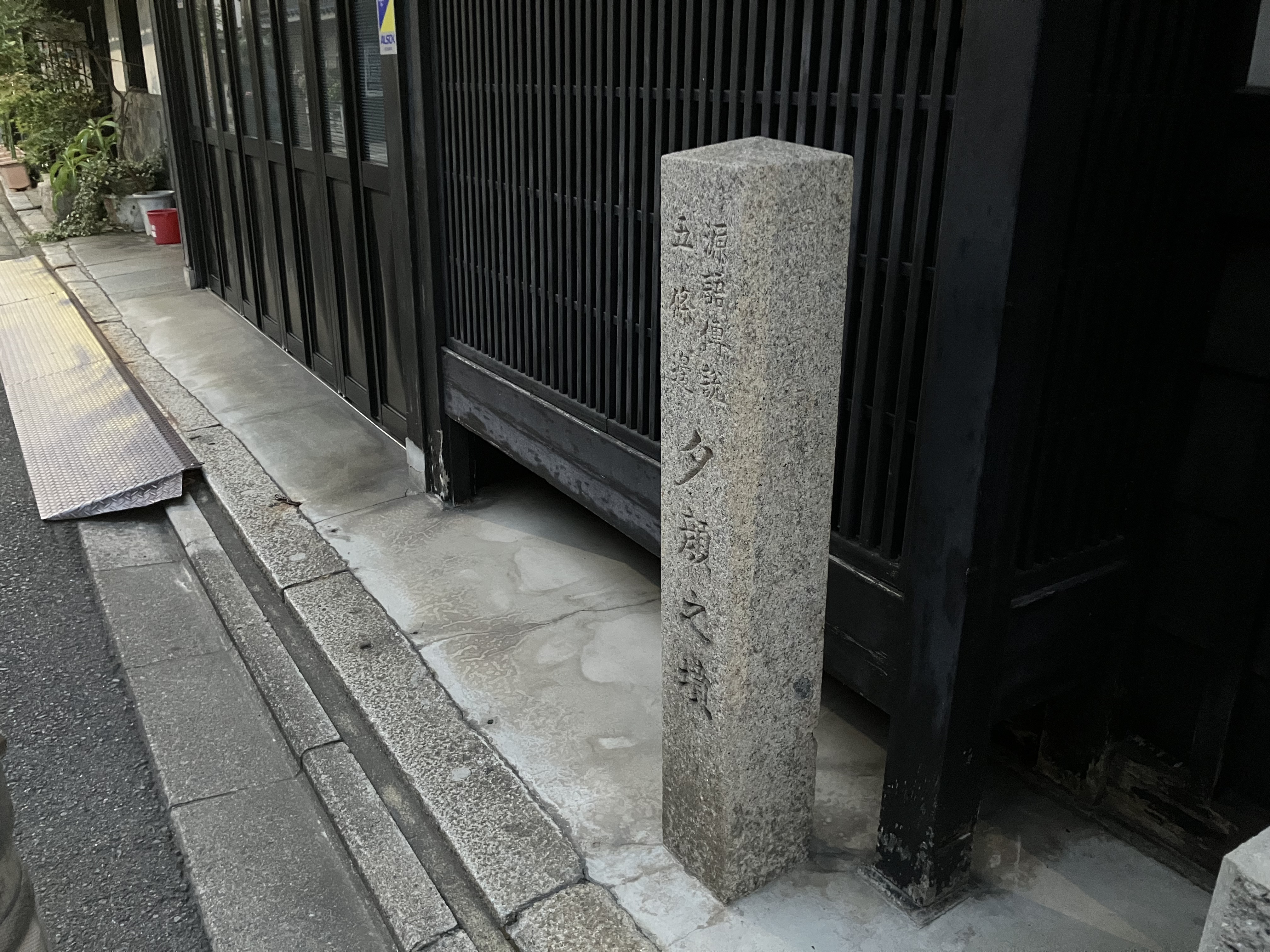
A tombstone said to be Yūgao's exists in modern-day Kyoto. Because it is located in the garden of a private residence, it is not open to the public. However, there is a small memorial monument in front of the house. If you are visiting Kyoto, why not stop by and take a look?
yugao monument
A stone monument marking the tombstone of Yūgao. It bears the inscription: "Legend of Genji; the Gojō area; Yūgao's tomb."
yugao monument
The gravestone is located inside the house, but as it is a private residence, entry is prohibited. There is a memorial monument in front of the house.
Access to the yugao monument.
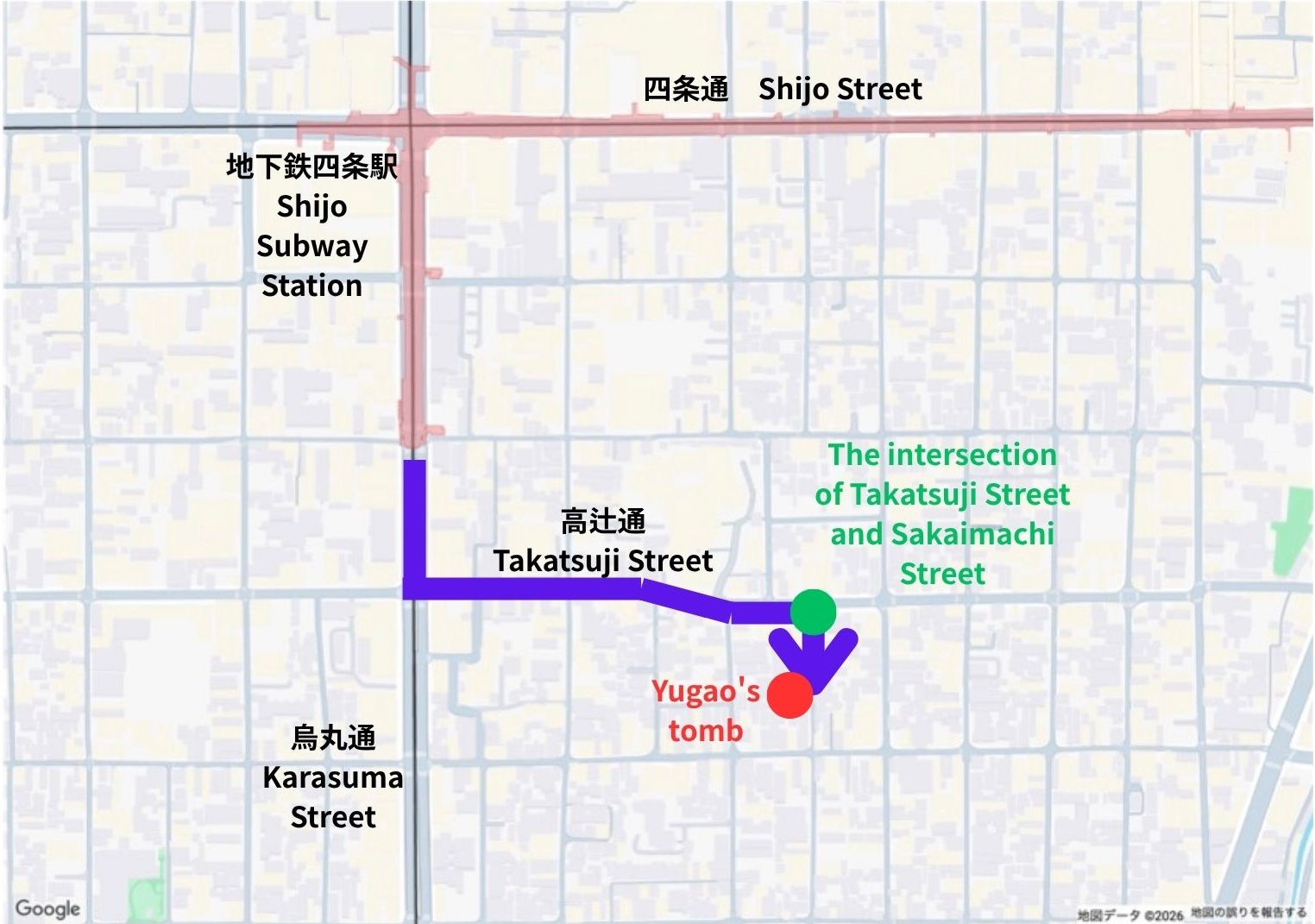
Access to the monument. From Kyoto Station, I took the subway to Shijo Station. Then, heading south at the intersection of Takatsuji Street and Sakaicho Street, you will see a monument on your right.

Discerning readers have likely already realized the issue: "The Tale of Genji is a work of fiction written by Murasaki Shikibu a thousand years ago. So, how can a grave for Yugao exist in the real Kyoto?"

Of course, this is not a genuine grave; Yūgao was not actually buried here. This monument was erected by fans of "The Tale of Genji". Moreover, it is not a recent creation; it dates back more than four hundred years. Since it appears in a Kyoto guidebook published in 1780, it is likely that many fans visited the site even back then.
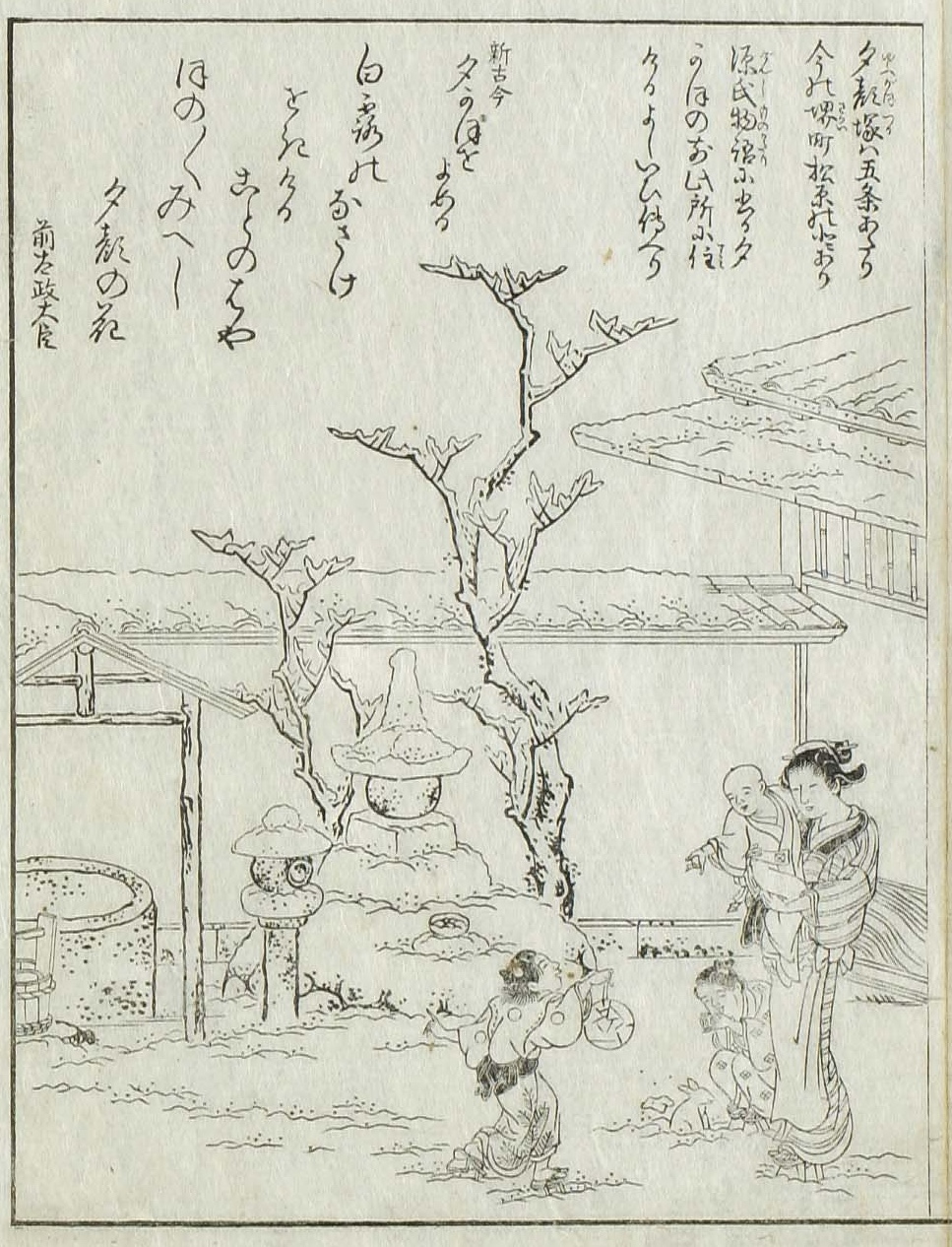
yugao monument
都名所図会[Published 1780]Miyako Meisho Zue (Illustrated Guide to Famous Sites in the Capital). A guidebook to Kyoto from the Edo period.

Kitamura Kigin(北村季吟), a scholar of "The Tale of Genji" who lived during that era, mentioned this grave in a 1686 essay—and expressed his bewilderment at its existence.

Since the fifty-four chapters of "The Tale of Genji" are fiction, there is no reason for Yūgao’s house or grave to exist in reality.

His point is entirely valid. It reminds me of "Don Quixote". For people in the seventeenth century to try to bring a fictional story from the eleventh century into reality seems like a ludicrous act of madness.

Yet, I also believe it is true that the people who built the grave—and those who visited it—loved "The Tale of Genji". Yūgao’s tombstone is not proof of a historical fact; it is proof of love for the work itself.

They say that the house and tombstone of Juliet are to be found in Verona. It seems the Japanese aren't the only ones prone to such obsessions. I hope you’ll pay a visit to the tombstone of Yugao as well.

About

I live in Kyoto.Introduce Japanese literature with the help of Google Translate.please excuse my english.

54Chapters

  1. 1. Kiritsubo / The Paulownia Court(桐壺)
  2. 2. The Broom-Tree / The Broom Tree(帚木)
  3. 3. Utsusemi / The Shell of the Locust(空蝉)
  4. 4. Yugao / Evening Faces(夕顔)
  5. 5. Murasaki / Lavender(若紫)
  6. 6. The Saffron-Flower / The Safflower(末摘花)
  7. 7. The Festival of Red Leaves / An Autumn Excursion(紅葉賀)
  8. 8. The Flower Feast / The Festival of the Cherry Blossoms(花宴)
  9. 9. Aoi / Heartvine(葵)
  10. 10. The Sacred Tree / The Sacred Tree(賢木)
  11. 11. The Village of Falling Flowers / The Orange Blossoms(花散里)
  12. 12. Exile at Suma / Suma(須磨)
  13. 13. Akashi / Akashi(明石)
  14. 14. The Flood Gauge / Channel Buoys(澪標)
  15. 15. The Palace in the Tangled Woods / The Wormwood Patch(蓬生)
  16. 16. A Meeting at the Frontier / The Gatehouse(関屋)
  17. 17. The Picture Competition / A Picture Contest(絵合)
  18. 18. The Wind in the Pine-Trees / The Wind in the Pines(松風)
  19. 19. A Wreath of Cloud / A Rack of Cloud(薄雲)
  20. 20. Asagao / The Morning Glory(朝顔)
  21. 21. The Maiden / The Maiden(少女)
  22. 22. Tamakatsura / The Jeweled Chaplet(玉鬘)
  23. 23. The First Song of the Year / The First Warbler(初音)
  24. 24. The Butterflies / Butterflies(胡蝶)
  25. 25. The Glow-Worm / Fireflies(蛍)
  26. 26. A Bed of Carnations / Wild Carnations(常夏)
  27. 27. The Flares / Flares(篝火)
  28. 28. The Typhoon / The Typhoon(野分)
  29. 29. The Royal Visit / The Royal Outing(行幸)
  30. 30. Blue Trousers / Purple Trousers(藤袴)
  31. 31. Makibashira / The Cypress Pillar(真木柱)
  32. 32. The Spray of Plum-Blossoms / A Branch of Plum(梅枝)
  33. 33. Fuji No Uraba / Wisteria Leaves(藤裏葉)
  34. 34. Wakana, Part I / New Herbs: Part One(若菜上)
  35. 35. Wakana, Part II / New Herbs: Part Two(若菜下)
  36. 36. Kashiwagi / The Oak Tree(柏木)
  37. 37. The Flute / The Flute(横笛)
  38. 38. (no title)/ The Bell Cricket(鈴虫)
  39. 39. Yugiri / Evening Mist(夕霧)
  40. 40. The Law / The Rites(御法)
  41. 41. Mirage / The Wizard(幻)
  42. Kumogakure / Vanished into the Clouds(雲隠)
  43. 42. Niou / His Perfumed Highness(匂宮)
  44. 43. Kobai / The Rose Plum(紅梅)
  45. 44. Bamboo River / Bamboo River(竹河)
  46. 45. The Bridge Maiden / The Lady at the Bridge(橋姫)
  47. 46. At the foot of the Oak-Tree / Beneath the Oak(椎本)
  48. 47. Agemaki / Trefoil Knots(総角)
  49. 48. Fern-Shoots / Early Ferns(早蕨)
  50. 49. The Mistletoe / The Ivy(宿木)
  51. 50. The Eastern House / The Eastern Cottage(東屋)
  52. 51. Ukifune / A Boat upon the Waters(浮舟)
  53. 52. The Gossamer-Fly / The Drake Fly(蜻蛉)
  54. 53. Writing-Practice / At Writing Practice(手習)
  55. 54. The Bridge of Dreams / The Floating Bridge of Dreams(夢浮橋)
  56. Topic

  57. All the character names in The Tale of Genji are nicknames. So, what do they mean?
  58. The tombstone of Yūgao -- The Tale of Genji: Famous Places and Historic Sites in Kyoto
  59. My favorite Genji
  60. My private reading experience